oldmanrukus.com /home
SYSTEM ONLINE
portfolio // v1.0

I build and run the infrastructure and the software on top of it.

Army veteran turned systems, networking, and software engineer. Two decades of moving workloads, wiring data centers, taming networks, and shipping apps — now packaged into an on-demand build service.

2
Tours in Iraq
3
Disciplines
3
Shipped products
6
Kids
01 // about

Albany born, Philly raised, Army forged.

The short version of a long road — from upstate New York to the streets of Philadelphia, through two tours in Iraq, and into a career spent keeping systems and networks alive.

01 Roots

I was born in Albany, New York, and raised in Philadelphia, Pennsylvania — a city that taught me to be resourceful, direct, and to fix what's in front of me. Those two places gave me the grit that's followed me into every server room and every deployment since.

02 The Army & two tours in Iraq

I served in the United States Army, including two combat tours in Iraq. The military is where I learned that uptime isn't a metric — it's a responsibility. Discipline, attention to detail, and staying calm when everything is on fire are the habits I carried straight into IT and engineering.

03 Family

I've been married twice, and I'm currently married to Jessica McLaughlin. Together we have a combined six children — a full, loud, wonderful house that keeps me grounded and motivated to keep building.

04 The career

For years I've worked across Systems, Networking, and Software Engineering for a range of firms, ultimately landing at Becket & Lee LLP, and contracting with Angelisanti Elite IT Solutions. The pages that follow break down exactly what that work looks like — the infrastructure I run, the networks I wire, and the software I ship.

U.S. Army Veteran Systems Engineering Networking Software Engineering Becket & Lee LLP Angelisanti Elite IT
02 // work history

Systems work, end to end.

From day-to-day hypervisor administration to building data centers from bare concrete and lifting whole application stacks into the cloud.

01 Systems administration & virtualization

A large part of my career has been hands-on systems work. I've planned and executed countless VMware ESXi migrations and moves — standing up new ESXi hosts, configuring vCenter clusters, and using vMotion and Storage vMotion to relocate live virtual machines between hosts and datastores with zero downtime. That means draining a host into maintenance mode, shifting its workloads across the cluster, patching or replacing the hardware, and bringing it back into rotation without a single user noticing.

Beyond the moves, the day-to-day is the craft: right-sizing VMs, managing snapshots and backups, building templates and golden images, configuring HA and DRS so the cluster heals and balances itself, and untangling the storage and networking that everything sits on. It's the unglamorous work that keeps a business running.

VMware ESXivCentervMotion HA / DRSSnapshots & Backups

02 Data center build-outs

I've taken on the heavier end of infrastructure: full data center build-outs. That starts long before a server is racked — with power and cooling planning, deciding how much redundant power (A/B feeds, UPS, and generator backup) each rack needs, and making sure the HVAC can actually carry the heat load the equipment will throw off.

From there it's the physical layer: racking and stacking servers, storage arrays, and network gear; running and labeling structured cabling; and building out the top-of-rack and core switching that ties it all together. Then the logical layer comes alive — addressing schemes, VLANs, storage fabrics, hypervisor clusters, and the monitoring that watches all of it. Done right, a build-out is a facility that a business can grow into for years, with clean documentation so the next person can find anything in seconds.

Power & CoolingRedundancy / UPS Racking & CablingCore SwitchingStorage Fabric

03 Cloud migration & containerization

The newer chapter of the work is getting workloads off owned hardware and into the cloud. A migration is never just a lift-and-shift — it's assessing each application, deciding what gets rehosted as-is, what gets re-platformed, and what gets re-architected. I move VM-based workloads into cloud compute, migrate data into managed databases and object storage, and re-point networking and DNS so the cutover is clean.

Where it pays off most is application containerization: taking a monolithic app off its dedicated server, breaking it into Docker containers, and orchestrating it so it scales horizontally, deploys in seconds, and recovers itself when something dies. Containerized apps are portable, cheaper to run, and far easier to update — you ship a new image instead of nursing a fragile server. That's the modern shape of the systems work: infrastructure as code, immutable deployments, and elasticity instead of forklift upgrades.

Cloud MigrationDocker ContainerizationManaged DatabasesObject Storage
03 // networking

Switching, firewalls, routing — and the links between sites.

A decade-plus across MSP environments touching every major vendor, with deep, current work on Cisco and modern WAN fabrics.

01 Switching, firewalls & routing

Working inside MSPs (Managed Service Providers) means you see everything. Over the years I've configured and supported a wide spread of switching, firewall, and routing technology across dozens of client networks — managed switches from the likes of Cisco, Meraki, Aruba, Ubiquiti, and HP; firewalls from Fortinet, SonicWall, and Palo Alto; and the routing and VLAN design that segments a business cleanly and securely.

That breadth eventually pointed me toward going deep on Cisco, which is where most of my current work lives. I work extensively with Cisco switching and routing — VLANs and trunking, spanning tree, layer-3 routing, access control, and the IOS command line that runs it all. When a network needs to be reliable, segmented, and observable, Cisco is the platform I reach for and the one I know best.

CiscoMerakiFortinet Palo AltoVLANs / TrunkingL3 Routing

02 VPNs, SD-WAN & cross-country connectivity

Networks are only useful when sites can talk to each other. I build the connection technologies that stitch locations together — site-to-site and client VPN tunnels (IPsec) for secure, encrypted links between offices, data centers, and remote workers.

More recently I've been leaning into SD-WAN, which I'm actively using today for cross-country communications and for connectivity into TierPoint data center facilities. SD-WAN lets me treat multiple underlying circuits — broadband, fiber, cellular — as one intelligent fabric: it steers traffic over the healthiest path in real time, fails over instantly when a link degrades, and applies consistent security and policy everywhere. The result is that a branch in one state and a data center on the other side of the country behave like they're on the same LAN, with the resilience a business actually depends on.

IPsec VPNSite-to-Site SD-WANTierPointMulti-circuit Failover
04 // software engineering

Shipping real products.

Three live products spanning AWS-backed web apps, live streaming, and a multiplayer game on Steam — each with real infrastructure underneath.

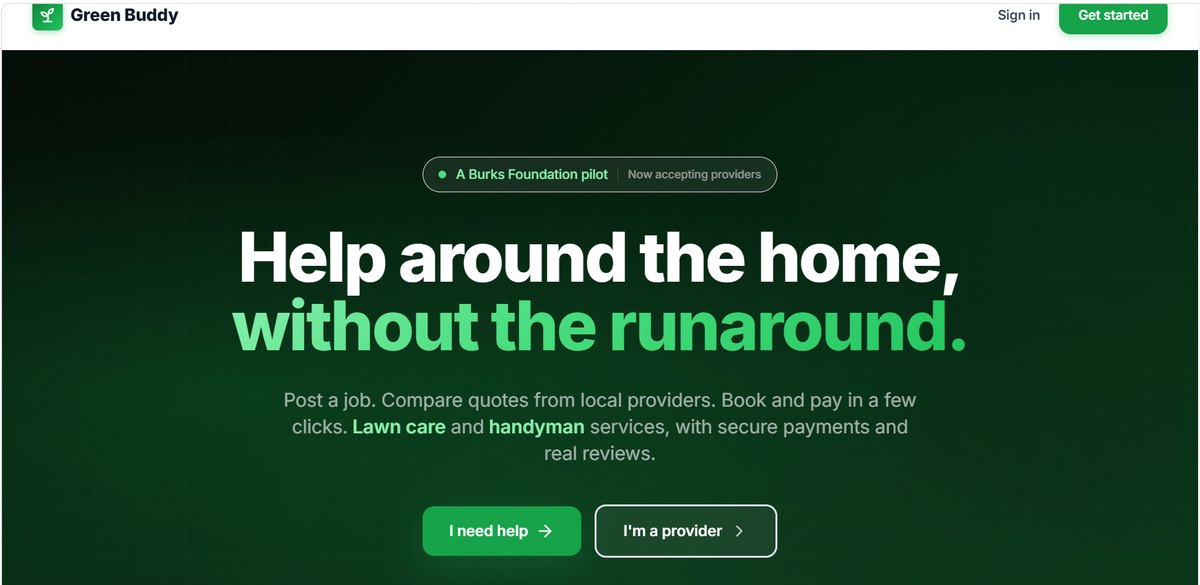
01 Greenbuddy — greenbuddyai.com

Greenbuddy is a cloud-native application running on AWS. The front end and APIs lean on a stack of managed AWS services so the app scales without me babysitting servers. Amazon S3 handles object storage — user uploads, media, and static assets — served cheaply and durably. Amazon Cognito manages the whole identity layer: user sign-up, sign-in, token issuance, and secure session handling, so authentication is handled by a hardened managed service instead of hand-rolled code. The application data lives in PostgreSQL, giving Greenbuddy a solid relational backbone for structured data, relationships, and queries.

Put together, it's a clean modern architecture — Cognito at the door, S3 for the heavy files, Postgres for the source of truth — all stitched together in AWS so the app stays available and scales with demand.

AWSAmazon S3CognitoPostgreSQL

02 Chiba — with Faizon Love

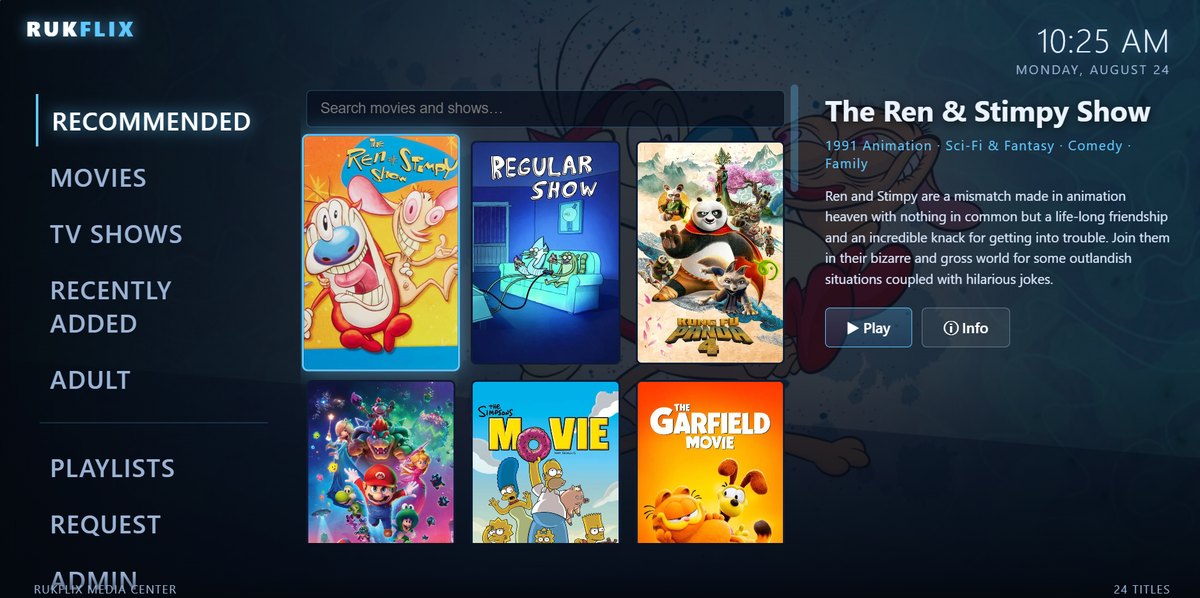
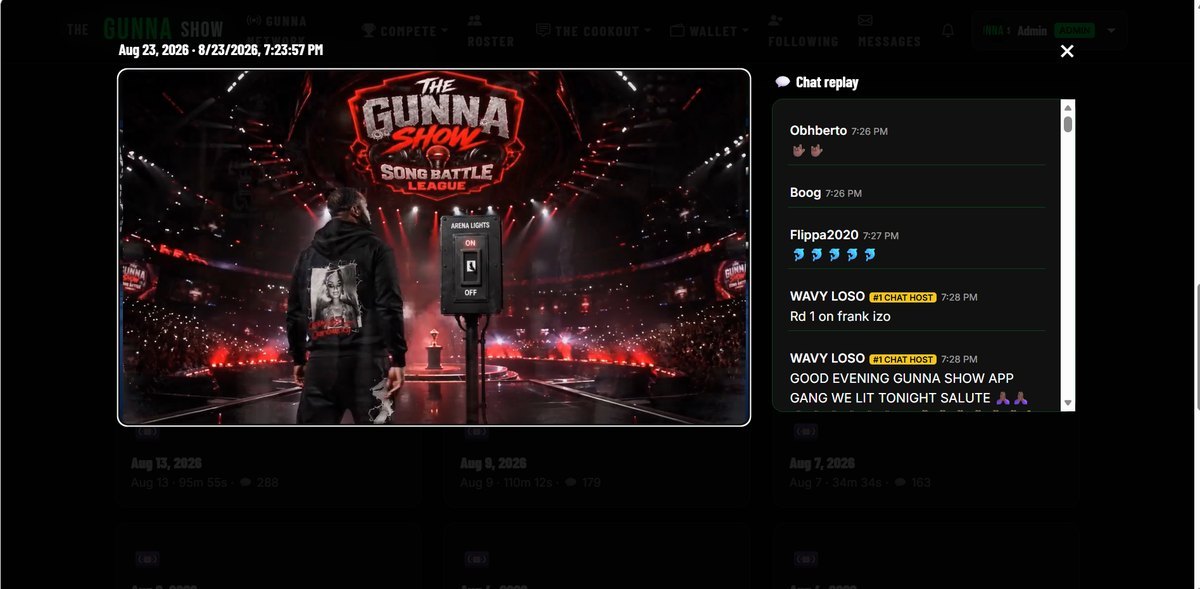
Chiba is a project I built alongside comedian Faizon Love — part streaming platform, part virtual comedy club. The app delivers streaming content to viewers and recreates the feel of a live comedy room online, where an audience gathers around a performance instead of watching alone.

Under the hood it runs on a streaming-media pipeline: content is ingested, transcoded into adaptive bitrates, and delivered over a CDN so it plays smoothly on any connection, with the application layer handling the "club" experience — the shared rooms, the lineup, and the audience around each show. It's the intersection of media engineering and product: making live and on-demand content feel like a place you go, not just a video you press play on.

Live StreamingAdaptive Bitrate CDN DeliveryVirtual Venue

03 Bash Sports — Online Bowling — on Steam

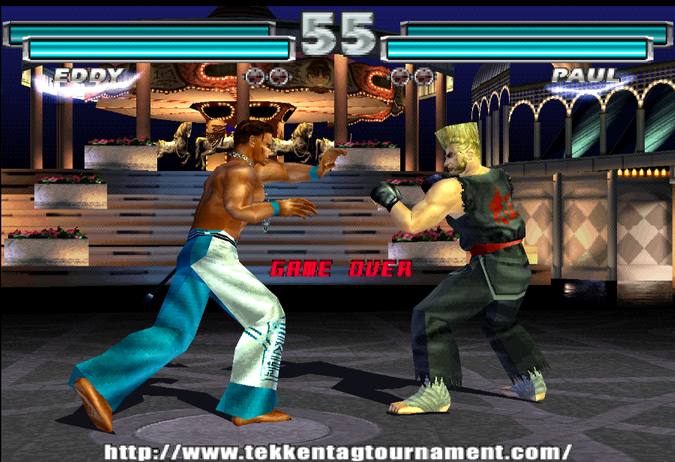
Bash Sports Online Bowling is a multiplayer bowling game currently on Steam. The client is built in Unity, which drives the 3D physics, the lanes and pin behavior, the animation, and the cross-platform rendering that makes the game feel good to play.

Behind the client is real server infrastructure for the online side — the backend that handles matchmaking, player sessions, real-time game state between competitors, and persistence of profiles and progression. Shipping a live multiplayer title means running and scaling that infrastructure so games stay in sync and lag-free for players connecting from anywhere — it's where my systems background and my software work meet in one product.

UnitySteam Multiplayer BackendMatchmakingGame Servers
$ // app vending machine

The App Vending Machine

Tell the bot what you want built. It scopes your app, prices it from the menu below, writes the full build spec, and tells you how to pay. Apps are prototyped and delivered fully usable in their current state.

Web App
$25 / 24–48h
▸ incl. external APIs / Google Maps
A website / web application, fully usable as delivered. Anything needing external APIs or Google Maps fits here.
Android App
$45 / 48–72h
▸ fully usable build
A native Android application, fully usable in its current state.
Desktop App
$50 / 48–72h
▸ with databasing
A desktop application with a built-in database.
Game — Small
$50 / 72h
▸ tight prototype
Small = one core mechanic, limited levels/assets, no online multiplayer, 2D or simple 3D.
Game — Big
$200 / 2 weeks
▸ multi-system
Big = many mechanics, larger world, custom 3D, online/multiplayer or persistence.
Add-on
+$200
▸ handles real money
Anything that needs to take real money (payments / payouts).
Add-on
+$300
▸ uses AI
Anything that needs to utilize AI.
Web apps: you provide your own domain name. The full source code is provided, and a temporary host is made available to you for 24 hours so you can try it live before you point your own domain at it.

Vending Machine Assistant

ready

✅ Your order is ready

$0

Pay by CashApp or Zelle, then upload your screenshot below:

CashApp
$oldmanrukusex
Zelle
2679797299
📸 Click to upload payment screenshot
📎 Click to upload assets (optional)
▸ view the full build prompt that was generated
Order received. Once your payment screenshot is confirmed, your build starts. You'll be contacted at the info you provided.